If you've started collecting quotes for a new roof in Miami-Dade, there's a decent chance the letters "NOA" have already shown up somewhere in the paperwork — and if nobody's walked you through what that actually means, it's a completely fair thing to be confused about before you sign anything.
What NOA Actually Stands For
NOA stands for Notice of Acceptance, and it's issued by Miami-Dade County's Product Control Section. In plain terms, it's the county's confirmation that a specific roofing product or system has been tested and approved for use under the Florida Building Code, including the extra requirements that apply specifically inside the High Velocity Hurricane Zone — the part of the code that covers Miami-Dade and Broward.
Why Miami-Dade Has Its Own Approval Process at All
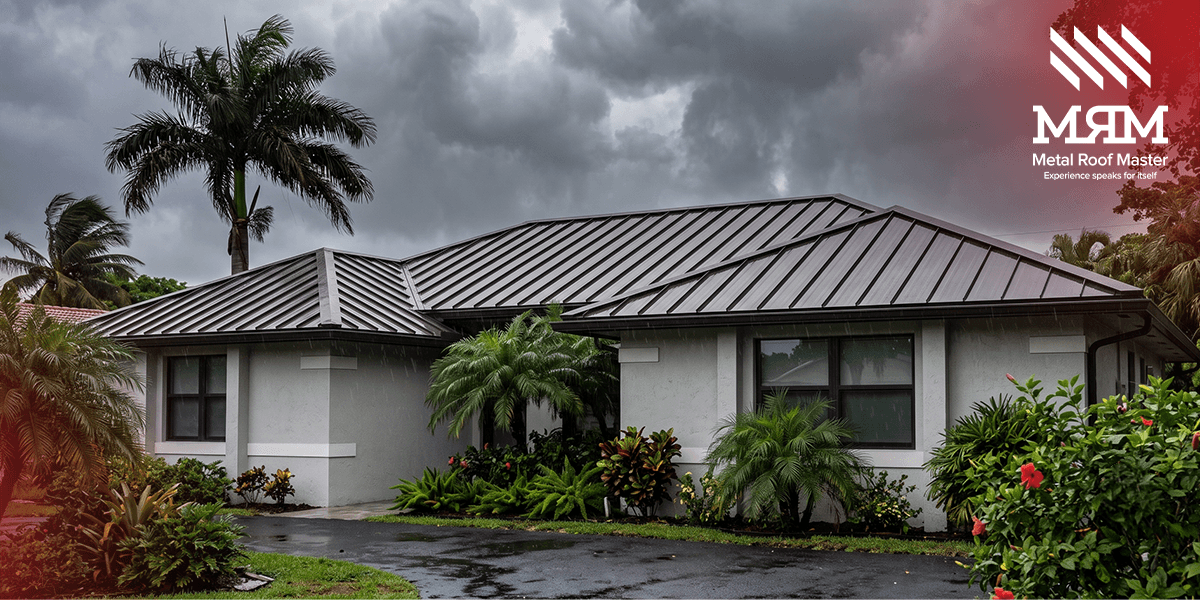
Miami-Dade and Broward test roofing products against wind and impact standards that go beyond most of the rest of the country's building code, a legacy that traces directly back to what Hurricane Andrew exposed about roofing failures in 1992. A product that's approved for general use elsewhere in Florida, or nationally, isn't automatically approved for use here — it needs its own Miami-Dade NOA, and that's exactly what makes a hurricane-rated metal roof in this county a documented claim rather than just a description.
What an NOA Actually Covers
An NOA doesn't approve "metal roofing" as a broad category — it approves a specific product, tested as a specific system. That means a particular panel profile, a specific fastener type and spacing pattern, and often a specific underlayment combination, all tested together and documented as that exact configuration. Swap out one piece of that system — a different fastener, a different underlayment — and the original NOA technically no longer covers what's actually on the roof. Every NOA also carries an expiration date, after which it needs to be renewed to remain valid.
The approval follows the specific roofing system, not simply the material category. Two metal roofs can look similar but have different approved configurations. That is why the product and installation details should match the NOA.
How to Read an NOA Without Being a Roofing Expert
You do not need to understand every technical line on an NOA to use it as a useful verification document.
Start with the product identification. The approval should identify the product or system being covered, rather than simply saying that “metal roofing” is approved.
Then look at the installation information. The approved configuration can include details such as the panel system, fastening method, spacing, and other components included in the tested assembly.
This is where a roofing quote and an NOA should be read together.
If the quote names one panel system but the approval document refers to a different product, that is worth asking about before signing. The same applies if the installation being proposed uses a fastening arrangement or other component that does not appear in the approved configuration.
The purpose of checking is not to turn the homeowner into a code official. It is to make sure the paperwork actually describes the roof that is being purchased.
The Quote, the Product, and the Approval Should Tell the Same Story
A simple way to think about the documentation is as three connected pieces.
The quote tells you what the contractor says will be installed.
The product documentation identifies the roofing system and its relevant technical information.
The NOA documents the approved configuration for the product or system covered by that approval.
If those three pieces do not line up, the homeowner should stop and ask for clarification.
For example, a quote may describe a standing-seam panel by a particular product name, while the NOA covers a specific panel profile and fastening configuration. The question is not whether both documents contain the word “metal.” The question is whether the exact system being proposed is the one covered by the approval.
That distinction becomes especially important when different products look similar from the ground.
This also matters when comparing roofing quotes. Two proposals may look similar but specify different products or installation details. If they do not match the same approval documentation, the homeowner should ask for clarification before choosing between them.
What to Ask Before Signing a Roofing Quote
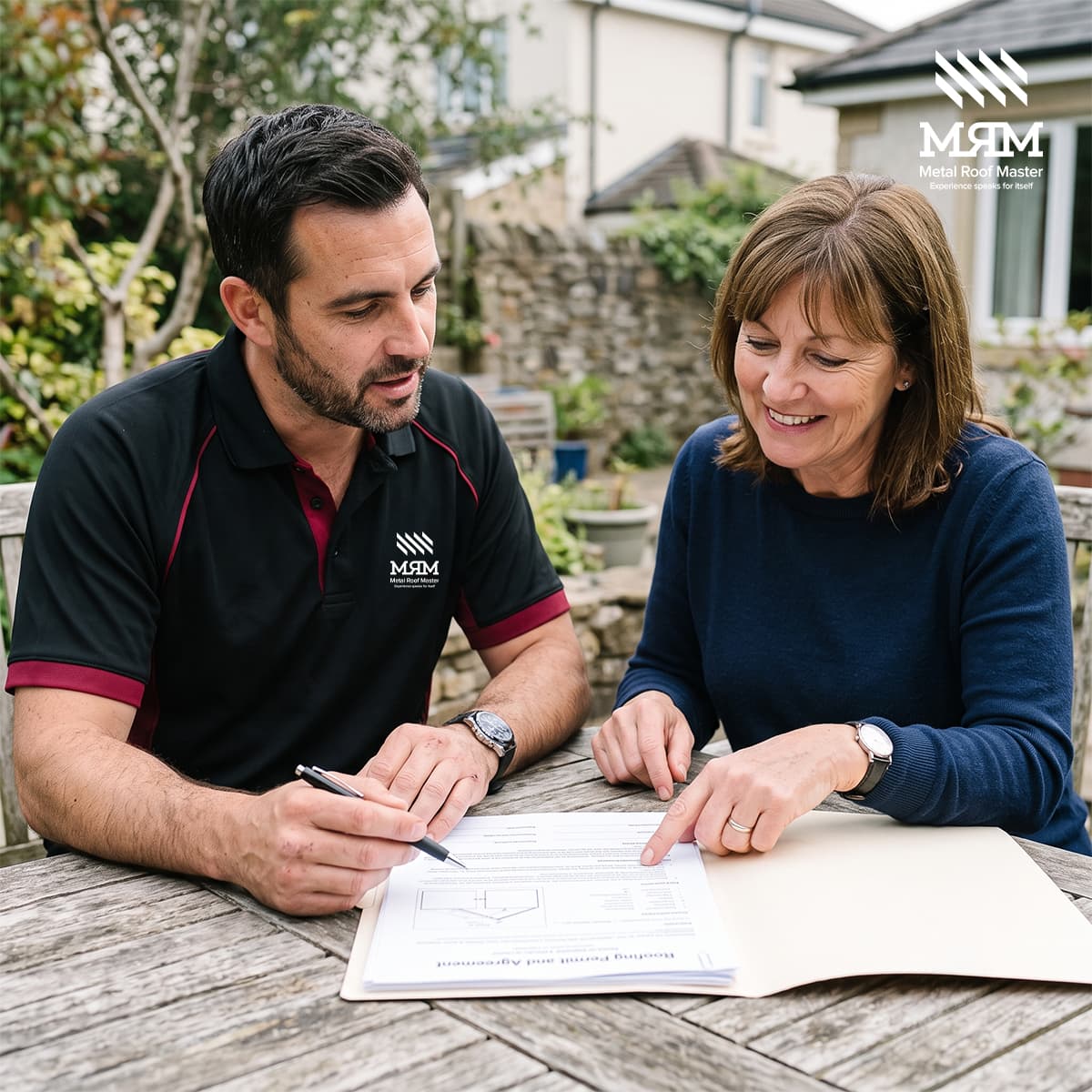
If an NOA is relevant to the roofing system being proposed, a homeowner can ask for five things before signing:
· What is the NOA number?
· What exact panel or product does it cover?
· What fastening pattern is approved?
· What other components or installation conditions are part of the approved configuration?
· Is the NOA currently valid?
These questions are simple enough to ask during the quoting process and specific enough to produce useful answers.
A contractor should also be able to explain what happens if the proposed installation differs from the configuration shown in the approval documentation.
Why Checking Before Installation Is Easier
The earlier a documentation question is identified, the easier it is to resolve.
Before installation, the product and system can still be discussed with the contractor or supplier. If there is a mismatch between the proposed material and the approval documentation, it can be addressed before the roof is installed.
After installation, the same question becomes more complicated because the physical system is already in place.
That is why keeping the NOA with the project documentation is useful even after the quote has been accepted. It creates a record of what product and configuration were intended for the project and gives the homeowner something concrete to reference if questions arise later.
NOA Is Documentation — Not a Substitute for the Whole Roofing Decision
An NOA answers an important question about product approval, but it does not answer every question a homeowner should ask before choosing a roofing contractor.
Price, installation scope, material specification, warranty terms, contractor experience, permitting, and the actual condition of the existing roof still matter.
The value of an NOA is narrower and more practical: it gives the homeowner a way to verify that the specific roofing product or system being proposed has the relevant approval documentation.
That makes it much more useful than simply seeing the words “hurricane-rated” on a sales page or quote.
When comparing roofing proposals, the strongest approach is therefore not to look at the lowest number first. Look at what is actually being proposed, what documentation supports it, and whether the pieces match before the work begins.
What Happens During Inspection
When your roof reaches the permitting and inspection stage, the building inspector may ask to see the NOA documentation on-site and confirm it matches what was actually installed — the same panel type, the same fastener pattern. This is exactly why staging that paperwork before the inspection, rather than scrambling for it afterward, is the difference between passing on the first visit and getting sent back for a second one.
Keeping the approval documentation organized also gives the contractor a clear reference if the inspector has a question about the installed system. Instead of treating the NOA as paperwork that only matters during the quoting stage, it can remain part of the project's permanent records along with the permit and other installation documents.
That record is useful after the inspection as well. If the homeowner later needs to identify the roofing system, verify project documentation, or discuss the installation with a contractor, having the approval information already connected to the project makes that process easier.
What This Means for You as a Homeowner
Beyond the permitting step, having the correct NOA on file protects you in two more concrete ways. First, it's your assurance that what's on your roof has actually been tested to hold up in a hurricane-force wind event, not just installed by someone who says it will. Second, it often connects directly to insurance: many Florida insurers offer premium discounts for wind-resistant roofing systems, and having the NOA documentation on hand is frequently part of what's needed to claim that discount.
Frequently Asked Questions
Does every metal roof in Miami-Dade need its own NOA?
The requirement depends on the specific roofing product or system and the applicable product-approval requirements. When Miami-Dade product approval applies, the approval should cover the specific product and installation configuration being used, rather than simply making a general claim that metal roofing is approved.
What happens if my contractor installs something without a valid NOA?
It can fail inspection, delay your permit closeout, and in some cases create issues later with insurance claims or resale, since the installed system technically isn't documented as code-compliant.
Can I check an NOA myself before hiring anyone?
Yes — Miami-Dade County's Product Control Section maintains public approval records that can be searched and cross-referenced against what a supplier or contractor tells you.
Does an NOA expire?
Yes, every NOA carries an expiration date, after which the manufacturer needs to file for renewal for it to remain a valid approval.